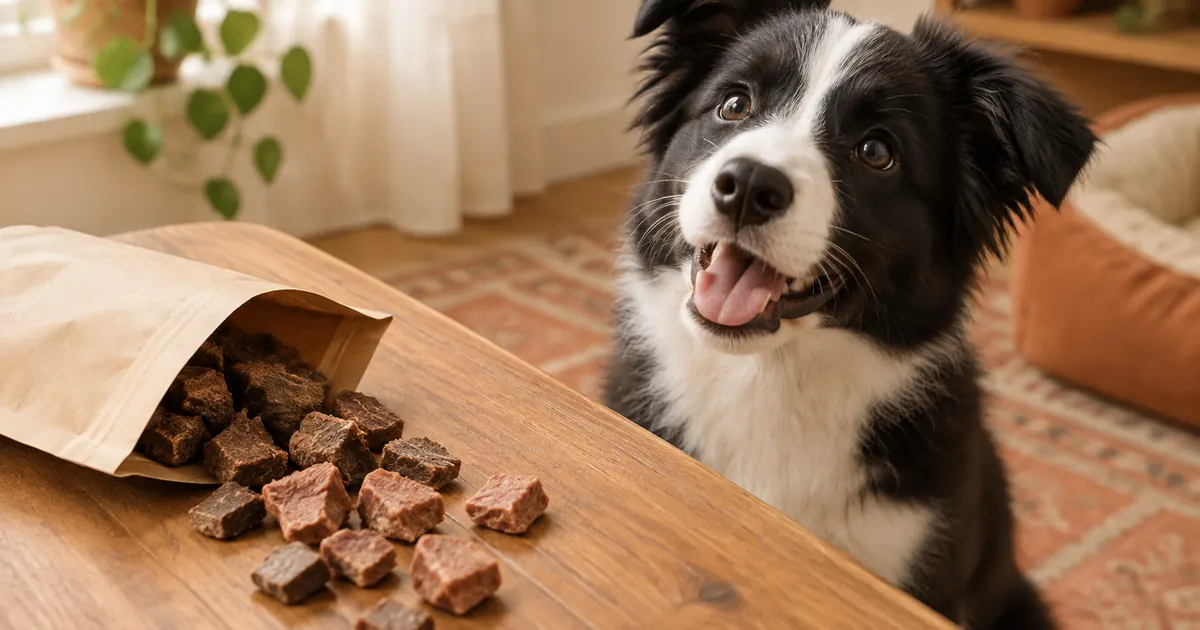
Ask a professional dog trainer what's in their treat pouch and you'll almost always hear the same answer: freeze-dried meat. Not biscuits, not jerky-style strips — freeze-dried. There's real science behind the preference, and understanding it helps you use these treats effectively instead of just expensively.
What Freeze-Drying Actually Does
Freeze-drying (lyophilization) works in two steps: raw meat is frozen solid, then placed under vacuum so the ice sublimates — turning directly from solid to vapor without ever becoming liquid. What's left is meat that has lost about 97% of its moisture but kept its cellular structure.
Compare that to baking, which exposes meat to sustained high heat. Heat denatures proteins, destroys many heat-sensitive vitamins, and — critically for training — burns off much of the aroma. Freeze-drying preserves both the nutrient profile of raw meat and the intense smell that makes dogs pay attention in a distracting environment.
Why Dogs Find Them Irresistible
Aroma drives canine food choice far more than taste. A high-protein freeze-dried raw treat smells like exactly what it is: raw meat. That intensity is why they work as high-value rewards — the tier of treat you reserve for recall training, vet visits, and situations with heavy distraction. When your neighbor's jogger passes and your dog has to choose between you and the jogger, kibble loses to freeze-dried liver almost every time.
Reading Labels Like a Nutritionist
Single ingredients
The best freeze-dried treats list one ingredient: the meat. "Chicken breast" is a complete product. "Chicken, chicken liver, natural flavor, glycerin, salt, preservatives" is a processed product with meat in it.
Grain-free context
Treats are a small share of a dog's diet, so grain content matters less than in staple food. Still, if your dog eats a limited-ingredient diet for allergy reasons, matching single-ingredient treats avoids muddying your elimination trials.
Protein percentage
Quality freeze-dried treats run 60–80% protein by analysis — they're essentially concentrated meat. This is a feature, but it leads to the most important rule.
Portioning: Treats Are Not Food
Veterinary nutritionists suggest treats stay under 10% of daily calories. Freeze-dried treats are calorie-dense — a small piece of concentrated meat carries more energy than its size suggests. Practical rules:
- Training sessions: pieces the size of a pea. Break larger treats apart; most crumble cleanly along the grain.
- Large dogs: the 10% rule still applies — a treat that's a pea for a Beagle is a crumb for a Great Dane, and both are equally thrilled.
- Small dogs: count treat calories against a small daily budget. A 10-pound dog's entire treat allowance might be 25–40 calories.
Handling and Safety
Freeze-dried raw is shelf-stable but not sterile. Standard handling applies: wash hands after handling, keep the bag sealed and dry, and use treats within a few weeks of opening for peak freshness. Because moisture is the enemy, never store the bag in the refrigerator — condensation rehydrates the meat and shortens shelf life. A cool, dry cupboard is ideal.
Note that freeze-drying preserves nutrients but doesn't kill all pathogens the way cooking does. Handle them like raw meat, and they're as safe as any treat on the market.
Freeze-Dried vs. Dehydrated vs. Jerky-Style
These three categories get lumped together and shouldn't be. Dehydrated treats are dried with low heat over many hours — gentler than baking but still cooked, with some nutrient loss and a chewier texture. Jerky-style treats are usually seasoned, glycerin-loaded, and heat-processed; check labels for salt and onion or garlic powder, both toxic to dogs. Freeze-dried is the only method that keeps the product technically raw, which is why single-ingredient freeze-dried treats dominate the premium tier.
Cost per training session
Freeze-dried treats look expensive per ounce until you count pieces. Because you feed pea-sized fragments, a 5-ounce bag yields hundreds of rewards — often a better cost-per-reinforcement than soft training treats that dry out in the pouch.
Smart Ways to Use Them
- Recall training: the highest-value moment for the highest-value treat. Pay your dog generously every single time they come when called.
- Vet and grooming visits: feed pieces during handling to reframe stressful experiences.
- Pill hiding: the crumbly texture grips a pill better than soft treats.
- Food topper: crumble over kibble for fussy eaters — a little aroma goes a long way.
The Bottom Line
Freeze-dried treats cost more per ounce and deliver more per piece: intact protein, intense aroma, single-ingredient simplicity. Used as high-value rewards within the 10% calorie budget, they're among the most effective tools in modern dog training. Stock up in our dog food and treats collection and see the difference at your next training session.