Small pets are often sold as starter animals, which creates a quiet problem: their housing is frequently the first thing owners underspend on. A rabbit, guinea pig, or hamster spends nearly its entire life in its enclosure. Getting the habitat right is the single highest-impact decision you'll make as a small-pet owner.
Space: Bigger Than the Pet Store Suggests
Retail minimums are survival floors, not welfare standards. Current guidance from welfare organizations is far more generous:
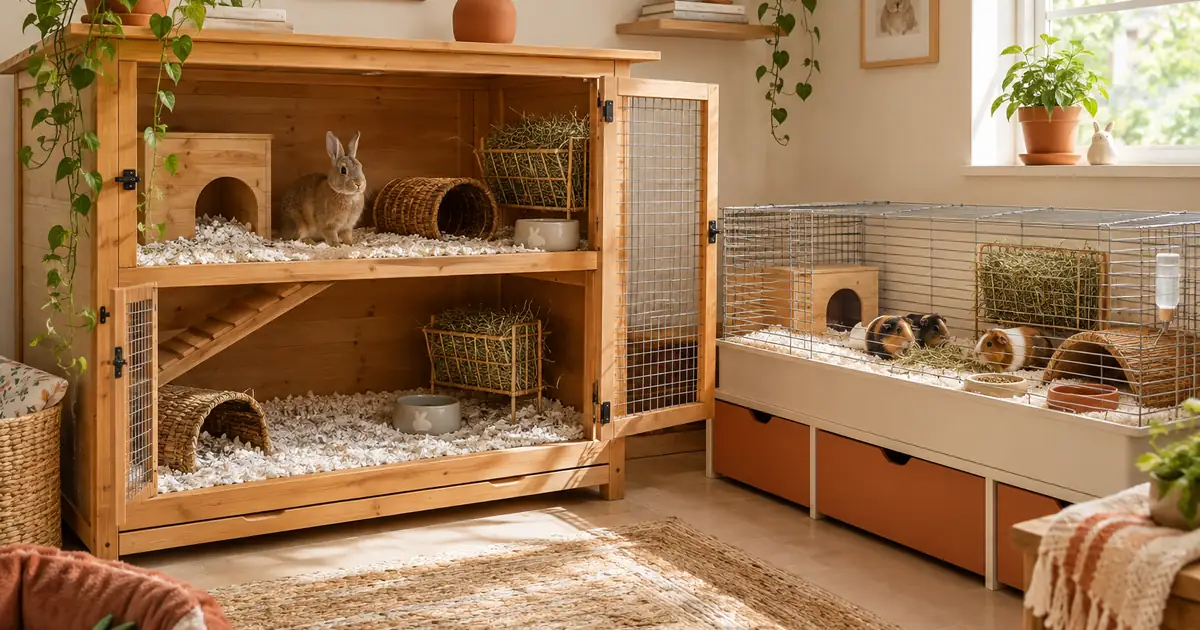
- Rabbits: a hutch plus a run, with enough total space for at least three full hops and standing upright on hind legs. A wooden hutch with a weatherproof metal frame works well outdoors or in a sheltered patio, giving both shelter and ventilation.
- Guinea pigs: a minimum of 7.5 square feet for a pair, with more always better. A 48-inch expandable metal cage leaves room to grow if you add a second pig.
- Hamsters: despite their size, hamsters are marathon runners — wild ones travel miles nightly. Aim for the largest enclosure you can accommodate with deep bedding for burrowing; a modular plastic cage with easy-clean trays makes the inevitable cleaning routine faster.
Bedding: Absorbency and Safety
Bedding does three jobs: absorbs moisture, controls odor, and lets animals perform natural digging and nesting behaviors.
What to use
Paper-based bedding is the modern standard. Recycled paper bedding with odor control is absorbent, nearly dust-free, and safe if nibbled — important, because all three species chew their environment. Aspen shavings are an acceptable alternative.
What to avoid
Cedar and untreated pine release aromatic oils that irritate small animals' respiratory tracts. Cat litter — especially clumping — can cause fatal blockages. Fluffy synthetic bedding material can tangle limbs and isn't digestible.
Placement: Where the Cage Lives Matters
- Temperature: small pets are heat-sensitive. Rabbits suffer above 77°F (25°C); guinea pigs above 80°F. Keep enclosures away from radiators, sunny windows, and electronics.
- Drafts: the floor of a cold room is a draft trap. Elevate cages and avoid entryways.
- Social position: prey animals are calmer when they can see household activity without being surrounded by it. A living-room corner beats an isolated hallway — but never directly next to a blaring TV.
- Day/night rhythm: hamsters are nocturnal; rabbits and guinea pigs are crepuscular (dawn and dusk). Their room should have a natural light cycle without being lit all night.
The Daily Routine
A good habitat still needs consistent care:
- Daily: refresh water, remove uneaten fresh food, spot-clean soiled bedding.
- Weekly: replace a third to half of bedding; wipe surfaces with a pet-safe cleaner.
- Monthly: full bedding change and enclosure wash. Easy-clean trays and removable parts pay for themselves here.
Enrichment: The Part Everyone Forgets
An enclosure is not a complete habitat without enrichment. Chewing isn't a vice — it's how rabbits, guinea pigs, and hamsters keep their continuously growing teeth worn down. Provide eco-friendly natural wood chew toys and rotate them weekly so they stay interesting. Cardboard tubes, hay-stuffed balls, and supervised floor time in a pet-proofed room all add mental stimulation.
Food-based enrichment works too: scatter-feeding hay and pellets instead of bowl-feeding encourages natural foraging. A heavy ceramic bowl prevents tipping — and the weight itself adds a tiny foraging challenge.
Cleaning Products and Routine Hygiene
Small animals have sensitive respiratory systems, so cleaning chemistry matters. White vinegar diluted in water handles urine scale safely. Avoid bleach fumes, aerosol sprays, and scented cleaners near any small-pet enclosure — a bird-safe rule of thumb applies here: if it smells strong to you, it's overwhelming to them. Rinse everything thoroughly and let it dry before the animal returns.
Hay deserves special mention: it's bedding, food, and enrichment in one. Feed hay from a rack or heavy dish rather than the floor where it soaks, and refresh it daily. A rabbit or guinea pig's digestive system is built around constant hay intake — it should be the largest part of the diet, with pellets as a supplement.
Companionship
Guinea pigs are herd animals and should live in same-sex pairs or groups — a bonded pair chirping to each other is also the best entertainment in the room. Rabbits are social too, though bonding takes patience and neutral territory. Hamsters are the exception — most species are fiercely solitary and must live alone.
Start Right, Then Enjoy
Build the habitat bigger than required, choose safe paper bedding, place it in a temperate and social spot, and add chewing and foraging enrichment. Do those four things and daily care becomes a pleasure instead of a chore. Explore our habitats collection and small pet care essentials to put the whole setup together.